
Ancient Statues, Mysterious Hand Positions, Burial Traditions, and the Hypothesis of a Recurring Authority
In the previous chapter, we explored a remarkable possibility: could ancient traditions of creators, Dying-and-Rising Deities, sacred rulers, and Civilization-Bringers preserve fragments of a much larger story?
But what if the mystery was not preserved only in myths, scriptures, and prophecies?
What if a clue had been left in stone?
Imagine discovering human figures from distant parts of the world, created in different periods, yet displaying a similar closed-mouth expression. Some also feature distinctive hand positions or appear in contexts associated with ancestors, fertility, or burial traditions.
Why did different societies create such figures? Were the similarities simply artistic conventions, expressions of shared human concerns, or evidence of cultural connections?
Or could these recurring features have a deeper significance?
This chapter brings together selected examples from ancient and later traditions, including the Moai of Easter Island, the Urfa Man of Türkiye, figures associated with Göbekli Tepe, fertility and funerary sculptures, European menhirs, and the mysterious Makapansgat pebble.
The purpose is not to assume that all these objects share one origin. It is to examine their visual similarities, historical contexts, and possible meanings before considering the author’s hypothesis.
One question will guide the investigation:
Could the closed-mouth figure have been more than an artistic form—and, within the hypothesis explored here, could it have served as a recurring symbol associated with a mysterious divine authority?
To investigate this possibility, we must begin with the figures themselves.
The Closed-Mouth Figure: What Are We Looking At?
Among the ancient and historical figures examined in this investigation, one visual feature repeatedly attracts attention: the closed-mouth expression.
From monumental stone figures to smaller statues associated with ancestors, fertility, and burial traditions, selected examples from different parts of the world display mouths represented by a firm line, tightly closed lips, or a restrained facial expression. In some figures, this feature appears alongside distinctive hand positions or other visual characteristics that invite comparison.
But why focus on the mouth?
A statue’s face can preserve more than a general representation of a human being. Its expression, proportions, posture, and gestures may reflect the artistic conventions, cultural beliefs, or symbolic intentions of the people who created it. The closed mouth may have been a natural artistic choice, a way of representing a particular expression, or a feature connected with meanings that are no longer fully understood.
The question becomes more intriguing when similar-looking features appear in objects created in different places and periods.
Are these similarities merely coincidental, or could some of them reflect a recurring symbolic tradition?
This investigation examines the closed-mouth expression alongside other features, including hand positions, fertility symbolism, ancestral representations, and archaeological contexts associated with death and burial. Each example must first be understood within its own cultural and historical setting before broader comparisons can be considered.
Within the hypothesis explored in this book, the closed-mouth figure raises a further possibility: could this distinctive feature have been associated with the mysterious Androgynous Dying-and-Rising Authority and Civilization-Bringer examined in the preceding chapters?
That possibility is not established by the appearance of the statues alone. A similar expression does not prove that different figures represent the same deity, share a common origin, or were created under the direction of one authority.
Nevertheless, the recurring visual feature provides a starting point for a question worth investigating.
Why did these makers represent the human mouth in this particular way—and could the similarities between their creations reveal something about the beliefs, symbols, or traditions they sought to preserve?
To explore this mystery, we must look beyond a single statue and compare the figures themselves.
Similar Figures Across Distant Lands
What makes the closed-mouth mystery intriguing is not one statue, but the possibility of finding comparable visual features across distant regions and different periods of history.
Among the examples examined in this investigation are the Moai of Easter Island, the Urfa Man of Türkiye, and the monumental human-form pillars of Göbekli Tepe. Other comparisons include ancient figures from Bolivia, Tahiti, Indonesia, and different regions of the world.
These objects were created in different cultural settings. Their dates, purposes, and meanings are not necessarily the same. Yet selected examples invite a closer examination of their facial expressions, hand positions, body posture, and overall representation of the human figure.
1. The Moai of Easter Island — The Mysterious Stone Faces
Location: Rapa Nui (Easter Island), southeastern Pacific Ocean
Approximate period: Many surviving Moai date from around the second millennium CE, with production continuing into the later centuries of the island’s traditional monumental culture.
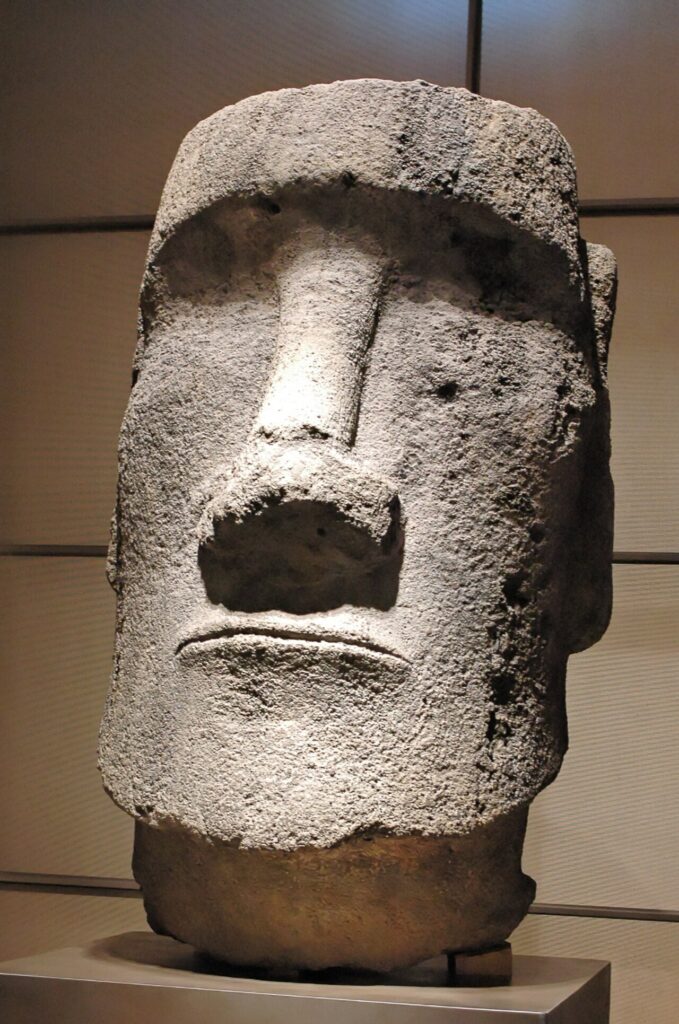
Moai of Rapa Nui (Easter Island), monumental stone figures associated with the island’s ancestral and ceremonial traditions.Original moai at the Louvre Museum, in Paris (Public domain)
The Moai are among the most recognizable monumental statues in the world. Their elongated faces, prominent brows, long noses, and firmly modelled mouths create a distinctive visual appearance. Many also have hands carved along the lower part of the torso.
The British Museum identifies Moai as ancestral figures and documents examples with carved hands and loincloths. Their meanings and uses must be understood within the cultural history of Rapa Nui rather than assumed to be identical to those of statues from other regions.
For this investigation, the Moai provide a starting point for examining how the human face and body were represented in monumental stone.
The question is: when a similar facial feature or hand position appears elsewhere, does it reflect a shared visual pattern, a comparable symbolic purpose, or simply different artistic traditions producing similar forms?
2. The Urfa Man — A Face Without a Clearly Visible Mouth
Location: Şanlıurfa, southeastern Türkiye
Approximate date: Around 11000- 9000 BCE
Material: Stone
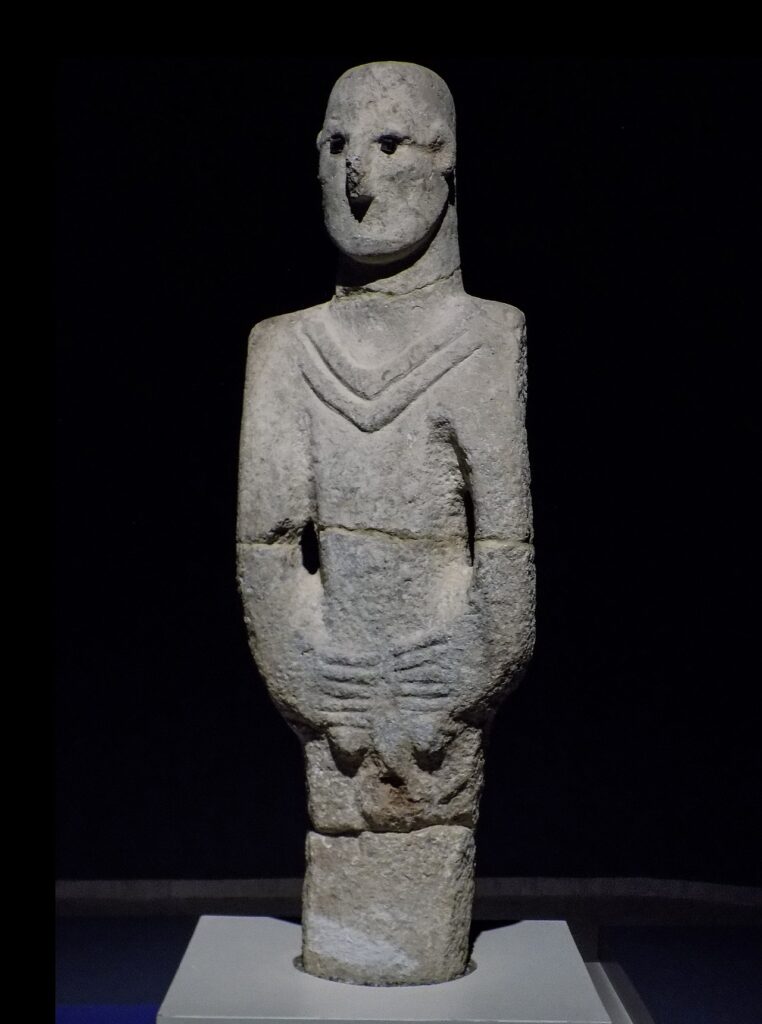
Urfa Man, Turkey The Urfa Man, a Neolithic human statue now displayed at the Şanlıurfa Archaeology Museum, Türkiye. Image credit: Cobija CC BY SA 4.0
The Urfa Man, also known as the Balıklıgöl Statue, is one of the most striking examples in this comparison. Discovered in 1993, the approximately life-sized figure dates to the Neolithic period and is notable for its deeply carved eyes, lack of a clearly modelled mouth, and hands held together in front of the lower body.
Unlike a conventional portrait with a clearly defined mouth, the Urfa Man’s face leaves the viewer with an unusual impression: the eyes are strongly emphasized, while the mouth is not visibly modelled.
This makes the statue especially relevant to the present investigation.
Was the absence of a clearly defined mouth simply an artistic choice, or did it have a meaning understood by the people who created the figure?
The available visual evidence does not establish the answer. Nevertheless, the combination of the distinctive face and the position of the hands makes the Urfa Man a useful example for comparison with other human-form sculptures.
3.The Sicán Tumi — Another Ancient Figure from Distant Lands
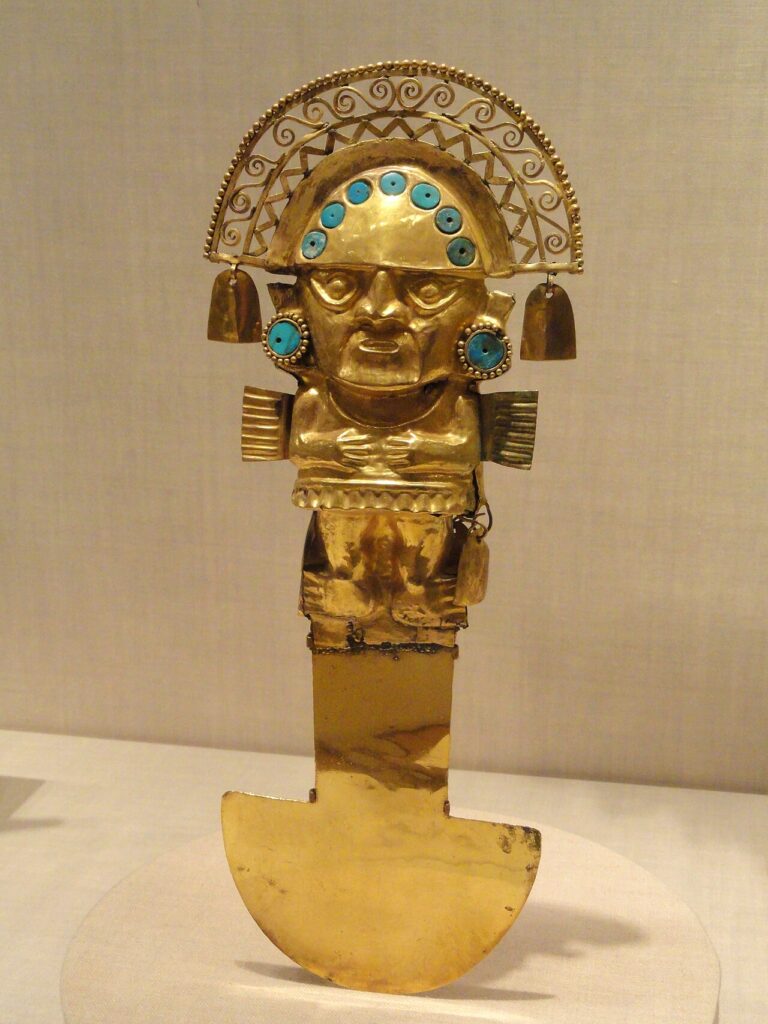
Credit – Daderot CCO
The Sicán (Lambayeque) culture of ancient Peru produced ceremonial objects featuring distinctive human-like figures. One example is a ceremonial tumi, or knife, dating to approximately 900–1100 CE and made from gold, silver, and turquoise. Its upper section depicts a figure whose form can be examined alongside other ancient representations included in this study. Although the tumi served a different purpose from monumental statues, it offers another opportunity to compare how ancient cultures represented human or divine figures through distinctive forms and symbolic details. Could these visual similarities reflect independent artistic traditions, shared symbolic ideas, or a deeper connection? The comparison raises this question but does not, by itself, establish a common origin or identity.
Could the repeated use of particular bodily gestures reflect conventions or symbolic ideas shared within a cultural tradition? That is a question worth examining before proposing connections across much greater distances.
4. A Recurring Hand Position — The Body as a Symbol
One feature that deserves separate attention is the placement of the hands near the lower abdomen or groin.
In the Urfa Man, the hands are held together in front of the body. Moai also have hands represented on the lower torso.
These are not exactly identical gestures, but they provide a basis for visual comparison.
In this study, the position of the hands is examined alongside the closed-mouth or minimally modelled facial expression. The combination may appear especially significant when compared with other statues associated with ancestors, fertility, or funerary practices.
However, a similar gesture does not necessarily have the same meaning everywhere. The symbolism of each figure must be considered in its own archaeological and cultural context.
Could the combination of facial treatment and hand position be more informative than either feature considered alone?
That question will become important when we examine the statues associated with death, ancestors, and fertility later in this chapter.
5. Other Figures Across Distant Regions
The investigation now extends beyond the monumental statues and ancient figures discussed earlier. The following two visual plates bring together selected prehistoric human figurines from different archaeological and cultural settings, including examples from Europe, Siberia, the Balkans, and the ancient Near East.
[Prehistoric Human Figurines and the Shigir Idol]
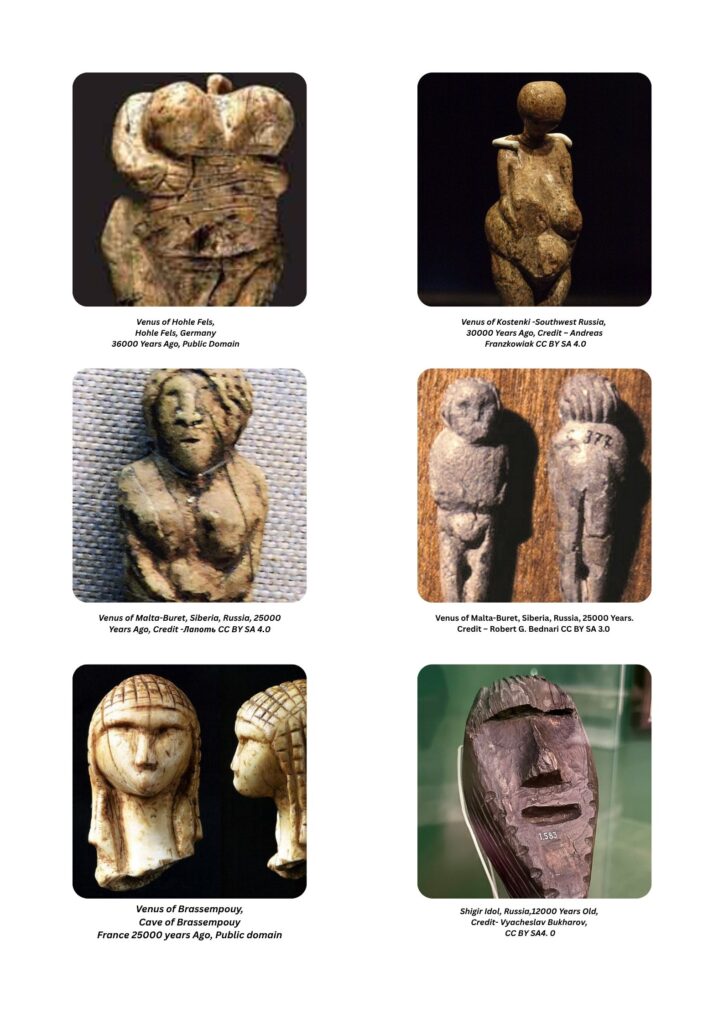
Selected prehistoric figurines and the Shigir Idol, presented for comparative visual examination.
[Ancient Human Figurines from Different Regions]
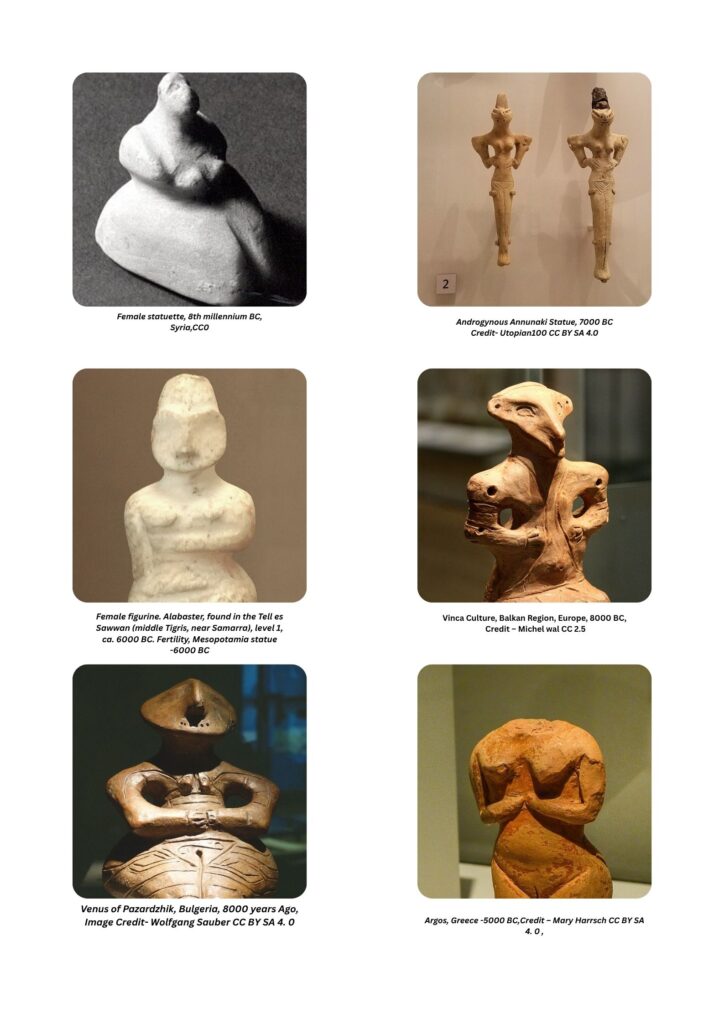
Selected ancient human representations displaying varied facial expressions, body postures, and hand positions.
Although these objects differ in material, form, date, and cultural context, some features invite closer examination. Several figures have simplified or minimally modelled facial features, while others display distinctive body positions or gestures.
Could the closed-mouth expression and recurring hand positions reveal a meaningful pattern—or are these similarities the result of independent artistic traditions?
The resemblance between figures does not establish that they shared a common origin or represented the same deity. Similar forms may emerge independently, reflect comparable symbolic concerns, or result from cultural contact. Each possibility requires separate consideration.
Within the author’s hypothesis, however, these recurring visual features raise a further question: could some of these figures have been associated with a broader tradition surrounding a mysterious divine authority or Civilization-Bringer?
That remains an interpretive possibility, not an established archaeological conclusion.
The Mystery Deepens
The figures presented here belong to different periods and cultural settings. They should not be treated as identical objects or assumed to represent the same individual.
Yet examining them side by side encourages a closer investigation of the features that first attracted attention: the treatment of the mouth, the representation of the face, and the position of the hands.
Are these similarities isolated artistic choices—or do they form a recurring visual pattern worth investigating further?
The next section examines the hand position more closely to explore whether it appears alongside other recurring features in selected ancient figures.
The Mystery Deepens
The Moai, the Urfa Man, and the Sican Civilization Tumi Knifes belong to different periods and cultural settings. They should not be treated as identical objects or assumed to represent the same figure.
Yet examining them side by side encourages a more precise investigation of the features that first attracted attention: the treatment of the mouth, the representation of the face, and the position of the hands.
Are these similarities isolated artistic choices—or do they form a recurring visual pattern worth investigating further?
To explore that question, the next step is to examine the hand position more closely and ask whether it appears alongside other recurring features in selected ancient figures.
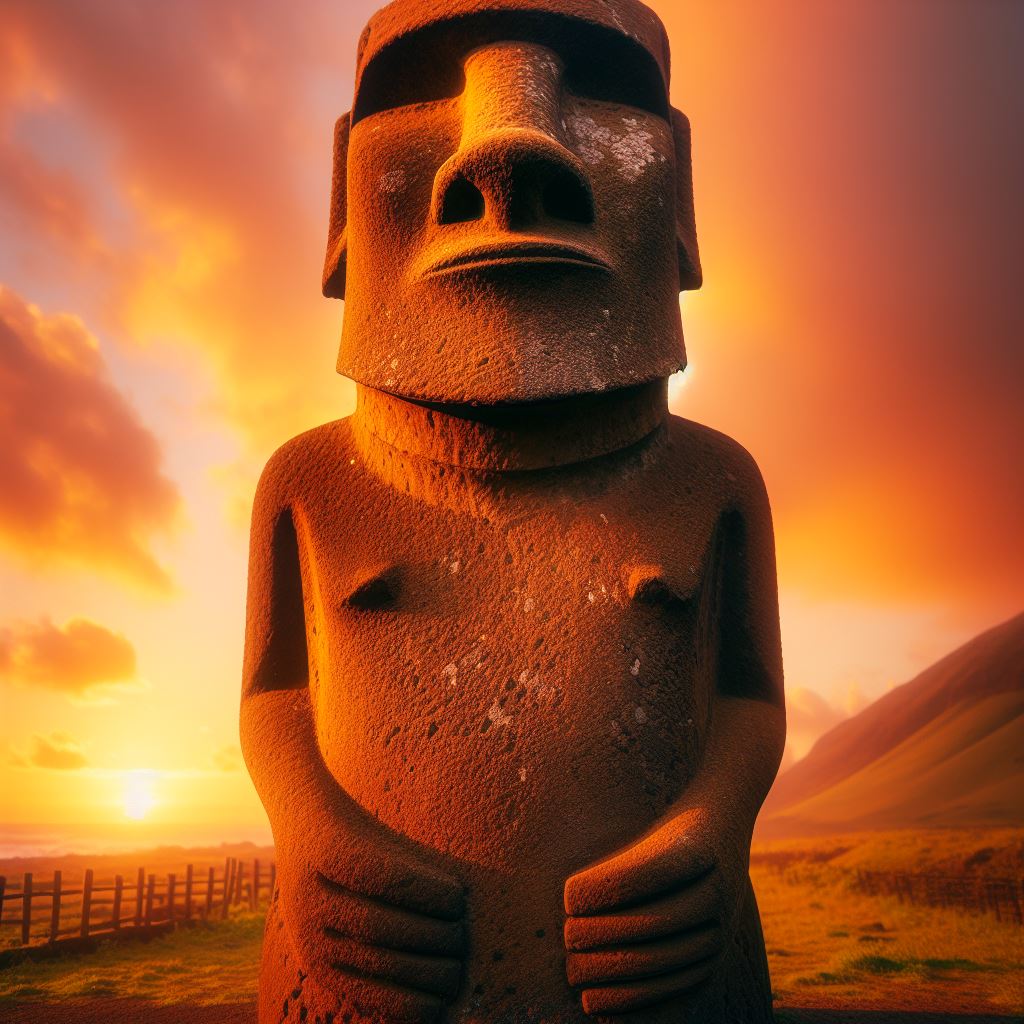
Moai Statue, Eastern Island
The Mysterious Hand Position: Is There a Recurring Pattern?
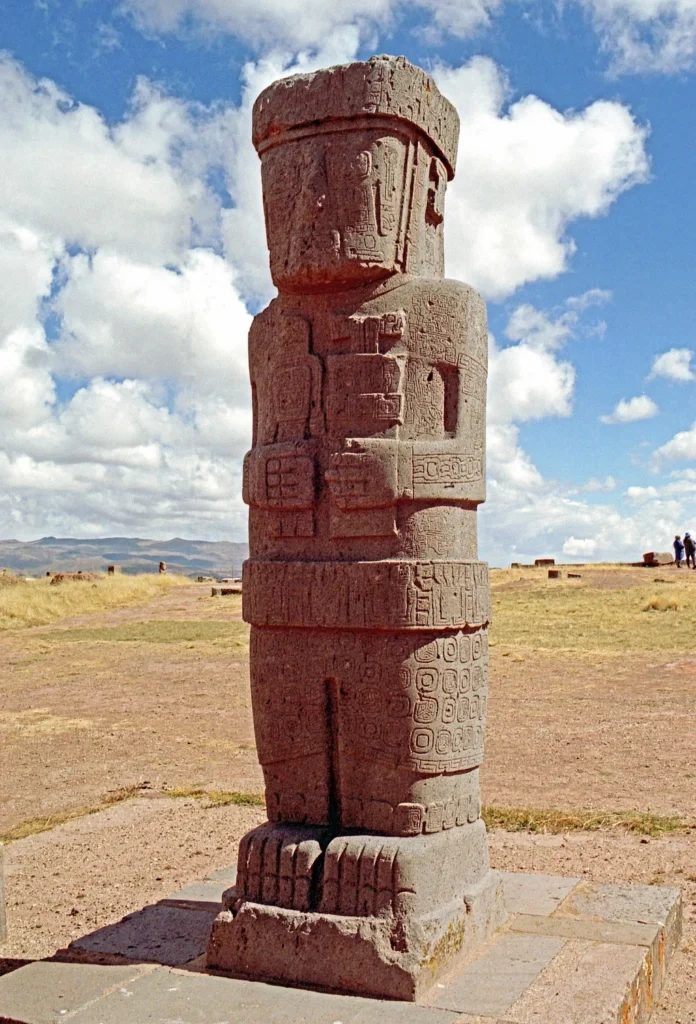
900 BC -1000 BC, Credit – Dennis Jarvis CC
The Mysterious Hand Position: Is There a Recurring Pattern?
Beyond the closed-mouth expression, another feature attracts attention in several figures examined in this investigation: the placement of the hands near the lower abdomen, navel, or sacrum.
On the Moai of Easter Island, the hands are represented along the lower torso. The Urfa Man of Türkiye holds his hands together in front of his body. The Gandao figures associated with the Kalash culture have also been described as displaying a hand position focused near the navel. These examples differ in form, age, and cultural context, yet they invite a closer visual comparison.
The question becomes more intriguing when similar features are reported in figures from distant regions, including Tiwanaku in Bolivia, Tahiti, and Indonesia. Are these similarities independent artistic choices, expressions of comparable cultural beliefs, or possible indications of contact between societies?
Researchers and writers have also drawn attention to similarities between ancient monumental figures. In The Ancient Religion of the Sun, Lara Atwood discusses comparisons involving Easter Island, Tiwanaku, and Göbekli Tepe, including Graham Hancock’s speculation about possible connections between distant ancient sites. Such interpretations raise interesting questions, but they do not by themselves establish that the figures shared a single origin or were created by one authority.
Within the hypothesis explored in this book, the recurring hand position becomes particularly interesting when considered alongside the closed-mouth expression and the appearance of figures associated with ancestors, fertility, or burial traditions.
Could these features have carried a shared symbolic meaning—or do they only appear similar to modern observers?
The evidence does not provide a definitive answer. Similar gestures may have developed independently, and their meanings must be investigated within the traditions in which they appeared. Nevertheless, comparing the face, hands, and archaeological context together offers a more focused way to examine the proposed pattern.
The investigation now turns to the observations and interpretations of researchers and writers who have explored similarities between ancient sites separated by great distances.
Researchers and Writers Who Have Noted Similarities
The similarities examined in this chapter raise a wider question: have other researchers, explorers, and writers also noticed unusual connections between ancient monuments, human figures, and symbolic traditions?
Over the years, several writers have explored similarities between distant archaeological sites, ancient artistic forms, and traditional beliefs. Their interpretations vary considerably. Some have proposed cultural contact between ancient societies, while others have explored the possibility that myths and symbols preserve fragments of forgotten history.
These observations do not establish that the figures discussed in this chapter originated from one source. Nevertheless, they provide a useful starting point for examining how similarities between ancient cultures have been interpreted—and why some questions continue to attract attention.
1.“Thor Heyerdahl and the Proposed Connections Between Ancient Sites.”
The hands of the moai statue point inward toward the sacrum area beneath the navel. Statues with the same hand position are found at the ancient site of Tiwanaku in Bolivia that Androgynous Viracocha was said to have been involved in building, and at the ancient site of Göbekli Tepe Turkey dated to around 9,600 BC, as well as in Tahiti and Indonesia. The excavations Thor Heyerdahl led on Easter Island also uncovered statues almost identical to those found at Tiwanaku, providing concrete evidence that there is a connection between the builders of both sites.
2.Graham Hancock’s Speculation About Distant Ancient Sites —
“Opinion of Research Scientist & author graham Hancock as a one wisdom bringer mind behind all architecture & same symbolic Statues in different time Capsule “
while commenting on the similarities between the eastern island, Tiwanaku, and Gobekli tepe he stated that:- “ if all these are coincidence then their profusion is rather extraordinary- unless, of course, the same magician of the gods who created & then buried the gobekli tepe in a time capsule at the end of the younger dryas some 11,600 years ago were also at work in eastern island ’’ these magicians Hancock refer as the wisdom bringers.- Ancient religion of sun book, Lara Atwood, page no .72,73,74
3.The Ancient Origins Interpretation: Statues, Symbolic Gestures, and Rebirth
-“Opinion of the guest author of www. ancient origin.com“
If only a single sample of these statues were to be seen at Göbekli Tepe, it would be assumed that local beliefs and culture reigned in this area of the world. But on the contrary- these valuable works of art have been found in many different parts of our planet. As such, it suggests a likely belief in “rebirth” that spread across continents over time.
● Cults of death, afterlife, rebirth, and fertility, for example, appeared in distant lands and also in the same epochs. How was that possible? When it comes to creating monumental sculptures, one wonders how people from remote regions around the world thought of building in similarly styled themes. What relationship can be made between Anatolia (Asia Minor, Turkey) and Easter Island, which is located in the Pacific Ocean?
● It is very interesting that the sculptures of Easter Island, Mexico, Costa Rica, Azerbaijan, French Polynesia, Western Mesopotamia, Saharan Africa, Bolivia, Egypt, Tahiti, Colombia, and the Marquesas reveal a similar appearance to Göbekli Tepe. Because of this surprising similarity, several questions must be asked: What connects all these mysterious places? What was the connection between these distant lands during ancient epochs? There are no obvious answers yet, but as research continues, new information may emerge and pieces of this ancient puzzle will fall into place.
And there is much evidence to suggest that Osiris, Viracocha, Maasaw, Odin, as well as all other wisdom bringers, were the same person- Ancient religion of the sun Page No.46
Closed-Mouth Figures Associated with Death, Ancestors, and Fertility
1. Gandao Fertility statue, Kalash Culture
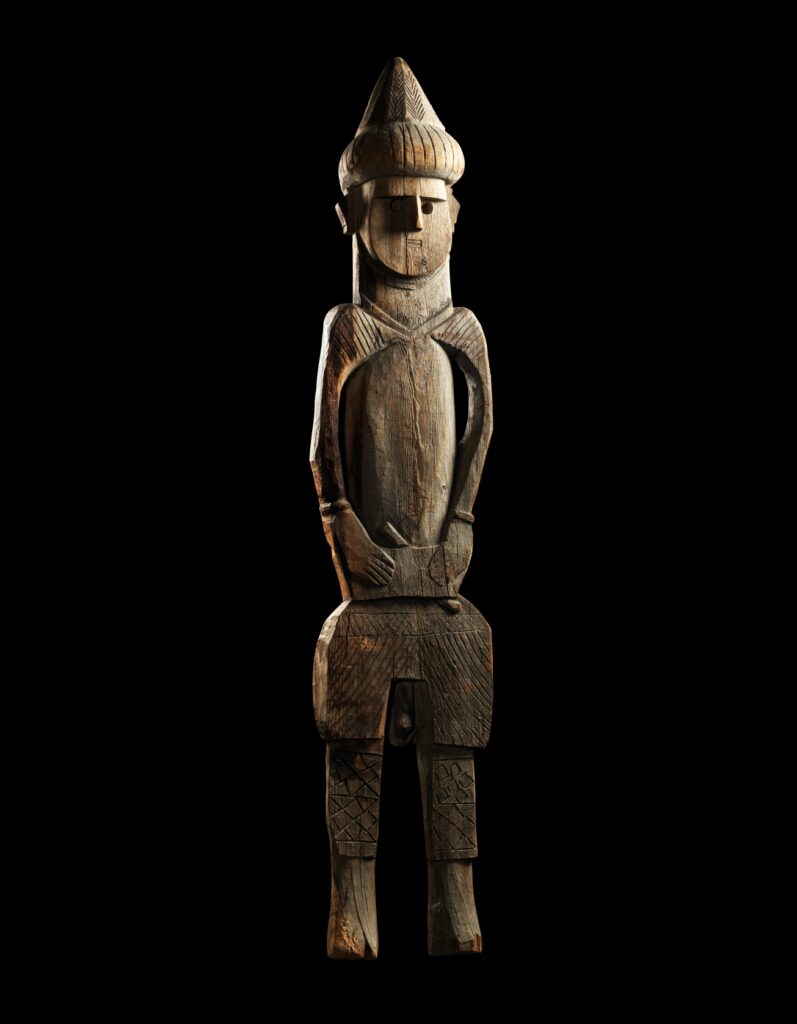
credit – Kafir
Gandao is a wooden image aimed at immortalizing the important departed souls of Kalash family members. Gandao is installed in the graveyard.
● The Kalasha is Pakistan’s only pagan tribe with a strength of approximately 4000.
● The Kalasha religion is more than 2000 years old.
● The Gandao image similarly symbolizes the hand focusing on the navel.
2.Same Sign Statue found on Tombstone of Thracian Leader -1500 BC
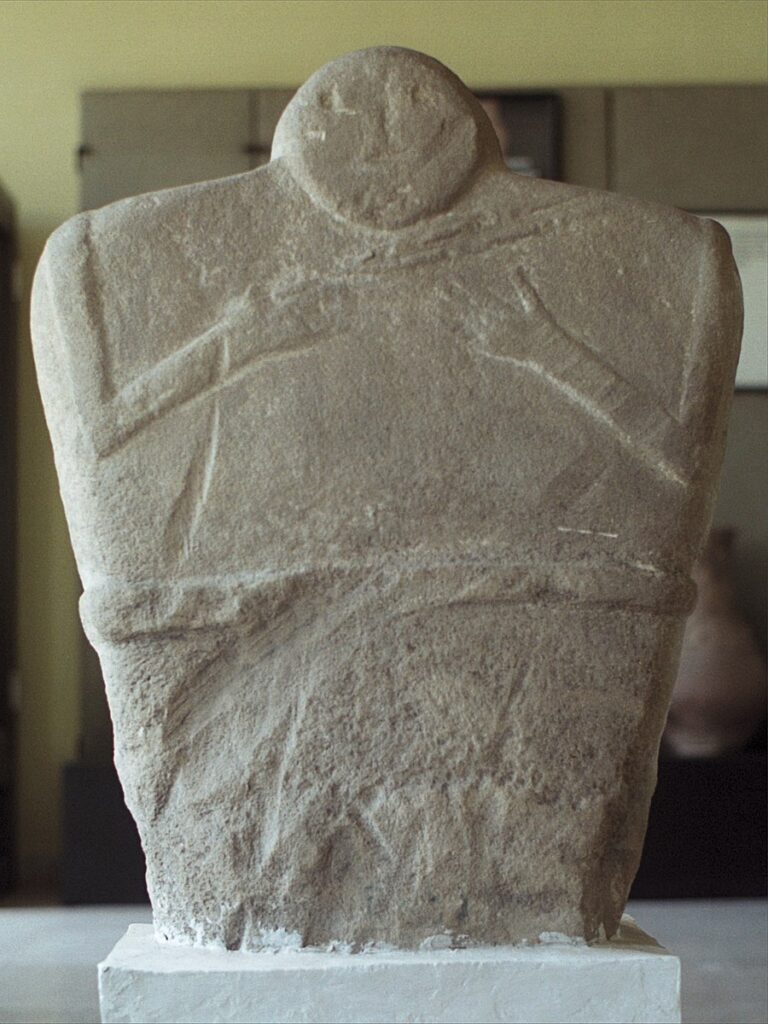
Credit- Zde CC BY SA 4.0
Similar closed mouth, Fertility statue found on the tombstone of Thracian Leader from 1500 BC
3.Haniwa Statue, Japan (3rd to 6th centuries AD)
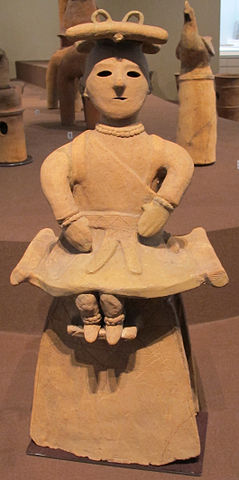
credit- Sailko CC BY SA 3.0
The Haniwa are terracotta clay figures that were made for ritual use and buried with the dead as funerary objects during the Kofun period (3rd to 6th centuries AD) of the history of Japan.
4.Fang Statue, Africa
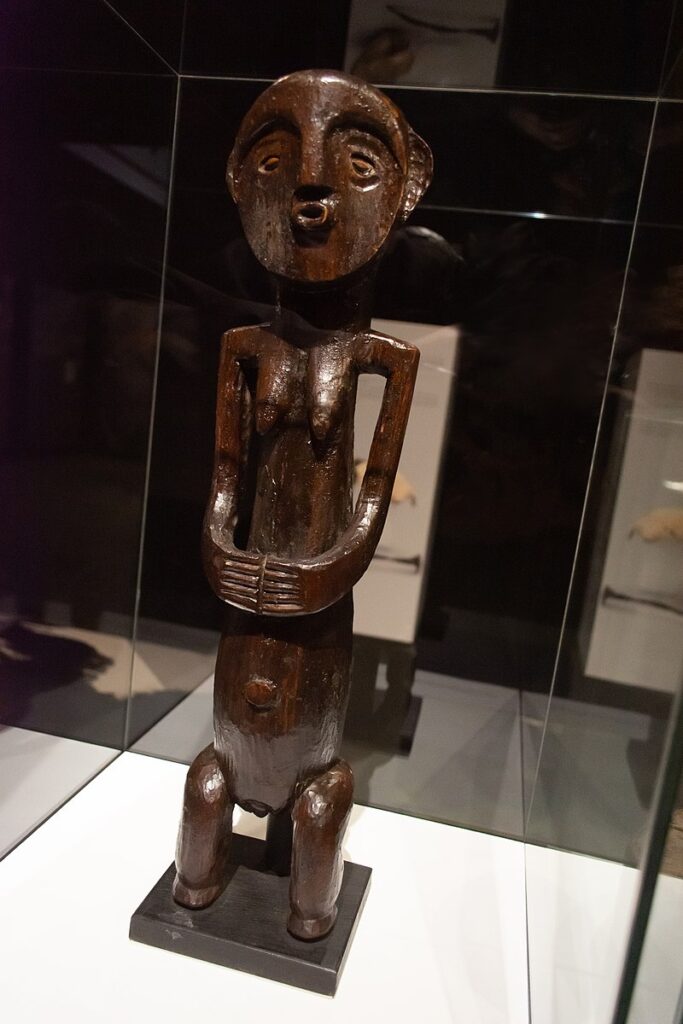
use in death rituals
5.Ubanga Nyama, Africa
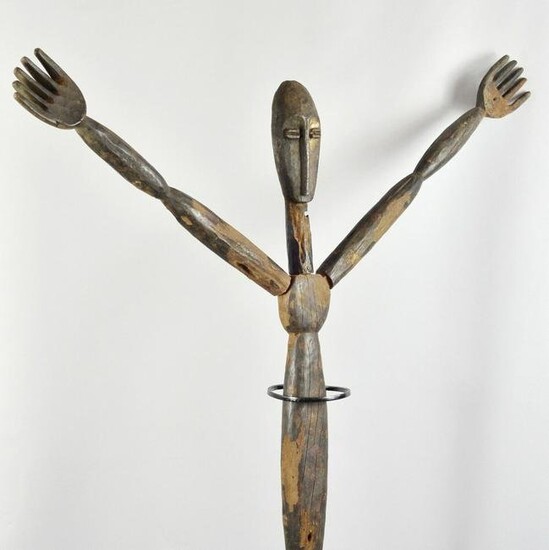
Image credit -Lot Art fair use
These figures, called ubanga nyama represent Suway, an ancestral founder of the Lengola. One such figure would have beenexhibited in the center of the village, after the death of chief
6.Ain Ghazal Statue, Jordan -8000 Years ago
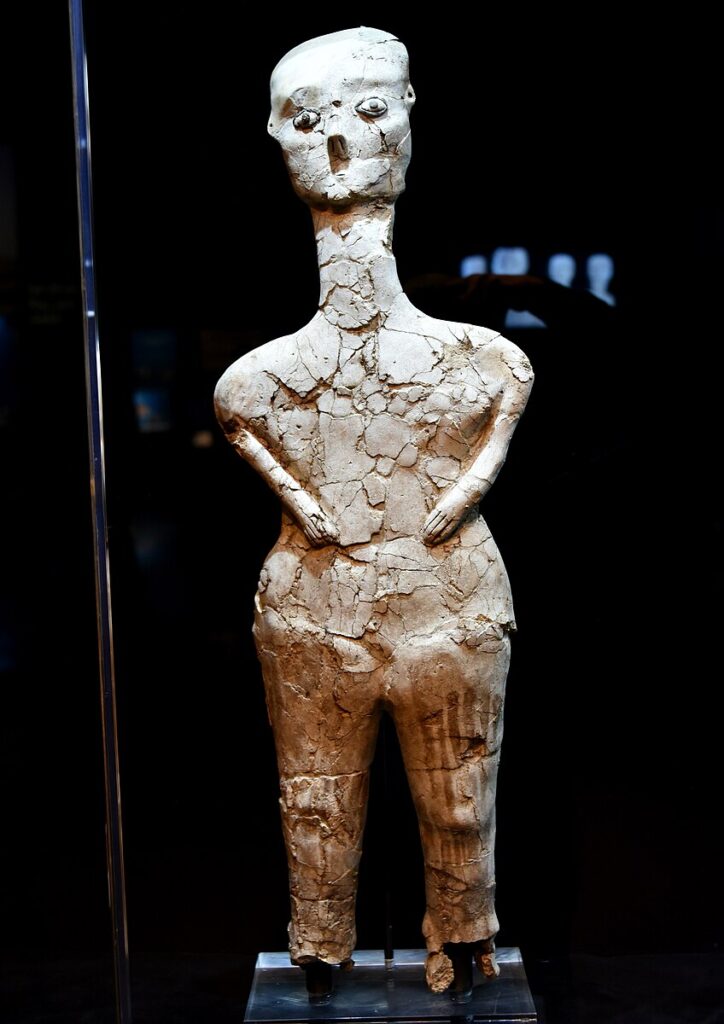
Credit -Osama Shukir Muhammed Amin FRCP(Glasg)
7000 years old Closed mouth fertility statue found in ain ghazal site of Jordan during Highway Construction.
The way the statues were made would not have permitted them to last long, and since they were buried in pristine condition it is possible that they were never on display for any extended period of time, but rather produced for the purpose of intentional burial.
Archeologists believe that these statues were directly related to burials of humans.
7.Ancient Europe Closed Mouth Mehnir Found Near Cemetery
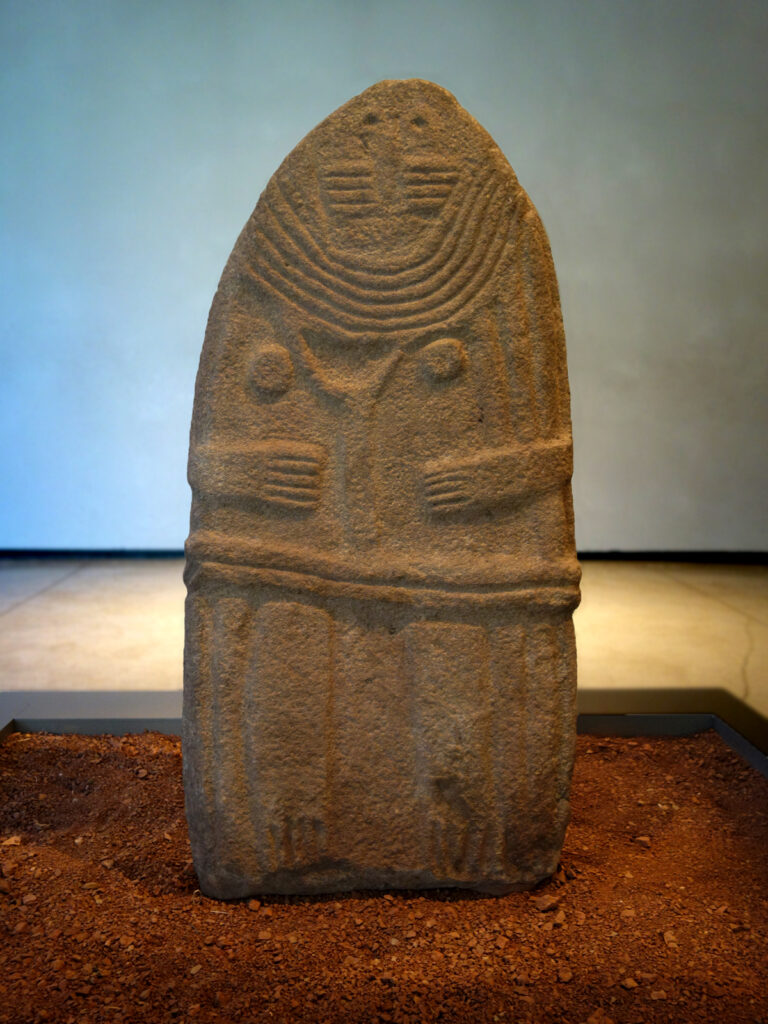
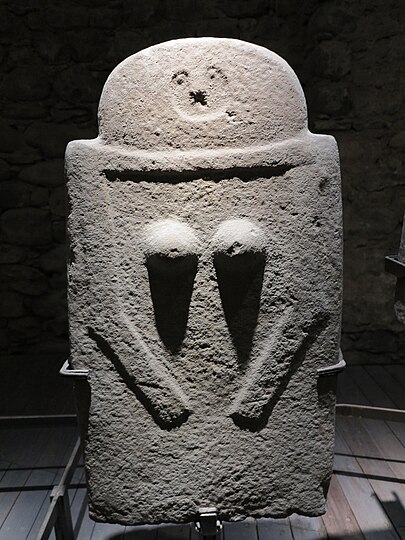
Credit- Sailko
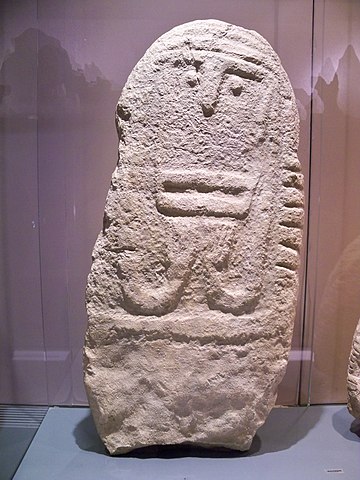
Credit – Véronique PAGNIER
menhir U Nativu in Patrimonio (Corsica)
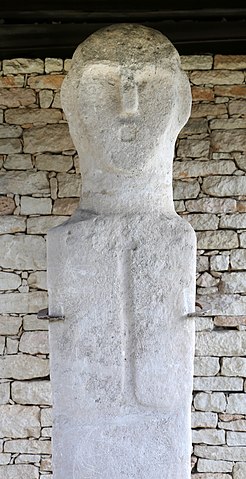
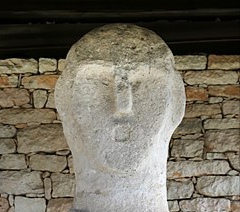
Credit- Sailko
8.Filtosa, France (4000 -3000 BC)
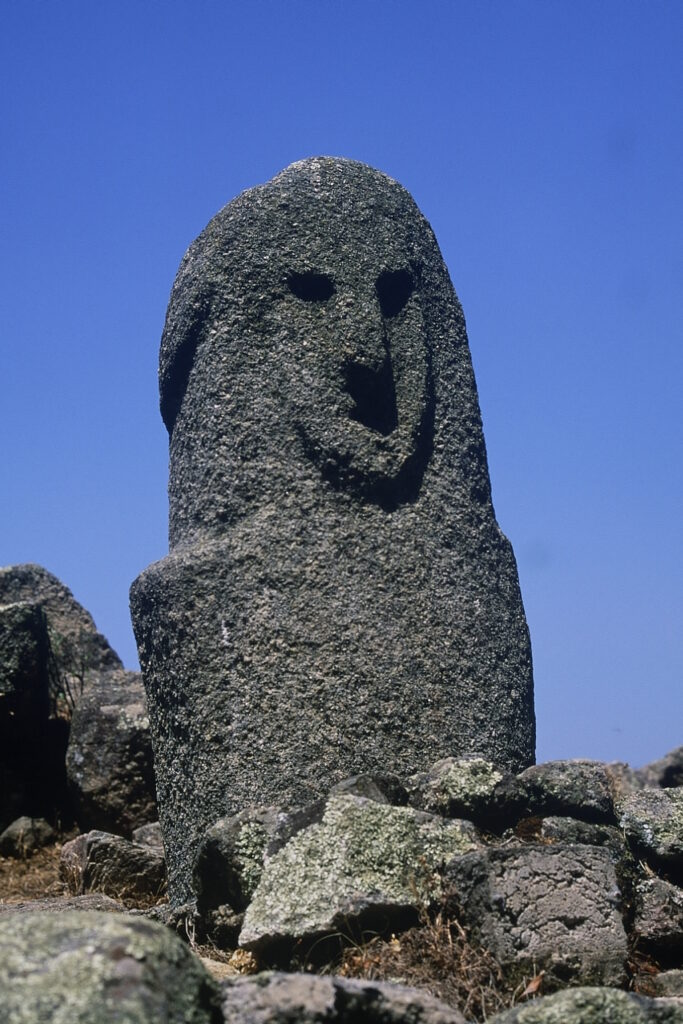
Credit – Blejuez CC BY SA 4.0
Such a statue mehnir found in various Ancient civilizations Cemetery, installed on or near the graveyard.
As we have seen, in all ancient civilizations There were
customs to apply mehnir on graveyard with a closed mouth fertility
symbol, probably this rituals created by this Androgynous
dying and Rising Deity, who took different names
in all ancient civilizations,it seems by this way he was intended to
leave proof of his one Authority founder of that civilization.
These statues were not placed by just one person but have been found in the artifacts of every civilization.
Therefore, the one who ordered the creation of such statues must have been a king, and that king must have been the same person who ruled over all civilizations. As we see today, people are very sensitive when it comes to religion, and any interference with their religious customs can lead to conflict between communities.
The fact that such statues were made
in the religions of all civilizations. suggests that they followed the rules set by a single authority. This must have been the mind of the creator of civilization, the androgynous dying and rising authority, who is known by different names in each civilization.
Perhaps, by repeatedly being reincarnated, this dying and Rising authority established these rules to provide evidence to future civilizations that human civilization has existed from an infinite amount of time and is governed by a single androgynous dying and rising creator of civilization authority soul,which is also referred to as the self fertilized hermaphrodite fertility Deity. And known as a first man, meaning the human lineage began with this soul.
The Makapansgat Pebble: A Much Older Puzzle
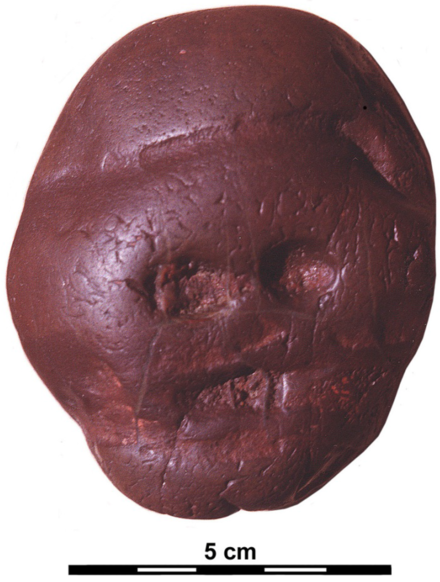
Credit -Robert G. Bednarik CC BY SA
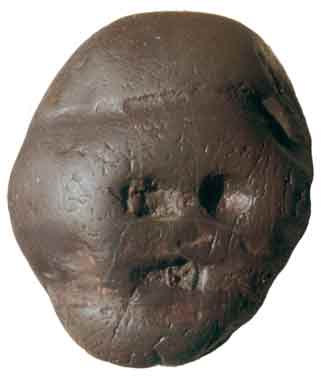
Credit- William Julius Allen
So do these Makapansgat pebble found in caves 30 lakh years ago near burial of human ancestors, also made for similar purpose, and left by same androgynous dying and Rising authority who is the creator of civilization authority and mentioned as ruler of eternity in indian vaidic scripture and in Egyptian book of the dead ?

Some theories suggest that these are water warned pebbles, because there is no scratch on it.
So waterworn pebbles will remain in round shape Cannot have carved eyes, and do not make a crown on top of the head.
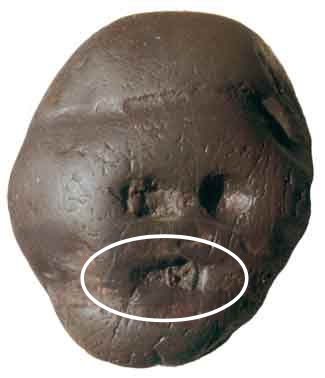
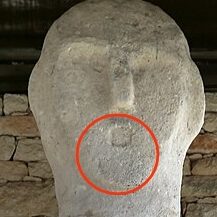
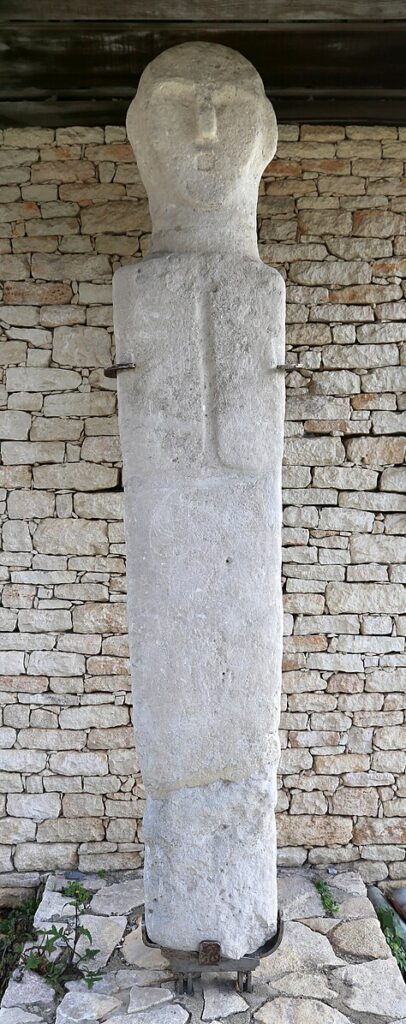
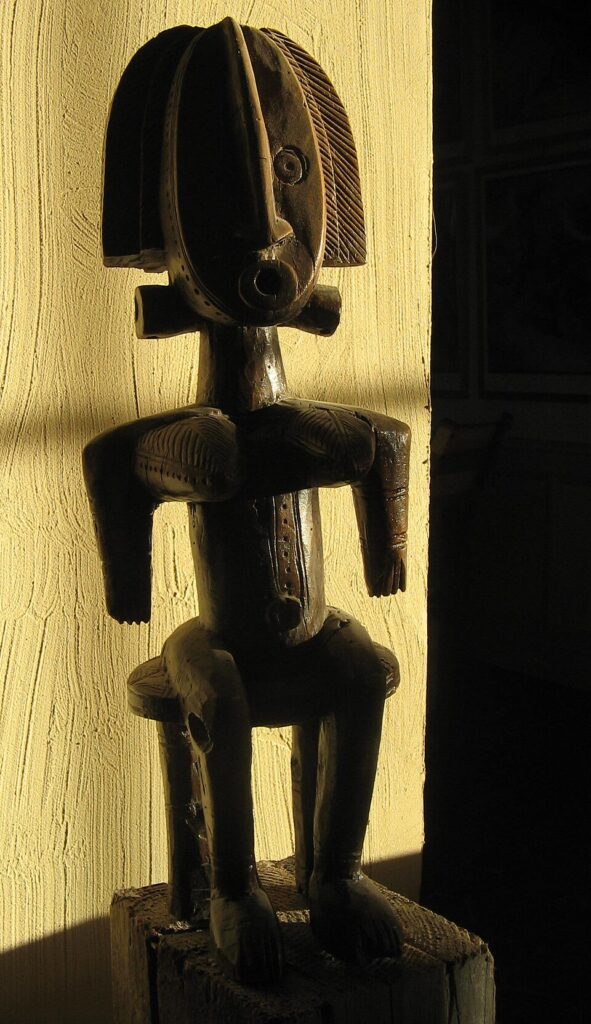
An African fetish statue, offered to young married couples as a charm for fertility. Mid 20th century, Yoruba culture, Alchemica CC BY SA 2.0
The way the closed mouth expression are
carved on the statue of the menhir U Nativu in Patrimonio (Corsica) is strikingly similar to the markings on the 3-million-year-old Makapansgat pebble. Over this vast span of 3 million years, it is possible that the original sculpture has undergone some deterioration. This is because the creator of these menhir statues consistently depicted the same closed-mouth expression on their faces. These statues were buried near dead bodies, possibly with the intention that future civilizations might discover them. The purpose might have been to provide evidence of the presence of this authority in that era when he will return in the future, thus reestablishing the truth. It is likely that this *dying and rising authority* commissioned the creation of these statues with this objective in mind.
Chachapoya Culture Statue – dead rituals
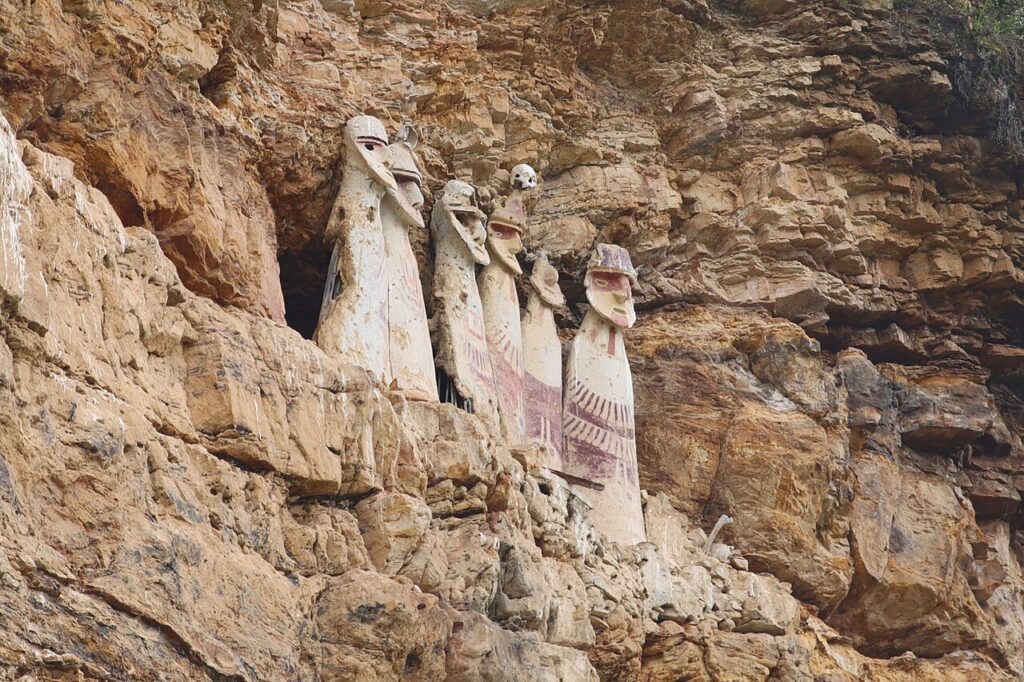
credit – Draceane
The Author’s Hypothesis: Could the Symbol Have Been Deliberately Preserved?
Throughout this investigation, recurring facial features, hand positions, and symbolic forms have raised a question: could some of these similarities represent more than independent artistic choices?
Within the author’s interpretation, one possibility is that a mysterious Androgynous Dying-and-Rising Authority and Civilization-Bringer was associated with a recognizable symbol that appeared in different cultural settings. Could such a symbol have been deliberately preserved so that future generations might recognize a continuing authority across different periods of human history?
This remains a hypothesis rather than an established archaeological conclusion. To explore why the possibility is intriguing, we must consider another mystery: how knowledge survives, changes, and disappears across generations.
The Mystery of Lost Knowledge and Recurring Symbols
Throughout human history, civilizations have developed remarkable knowledge, technologies, architectural techniques, and symbolic traditions. Some techniques were lost, some were forgotten, and others survived through cultural transmission or were rediscovered by later generations. The sound-producing stone pillars of Hampi, the engineering achievements of ancient pyramids, and the disappearance of certain traditional crafts all raise questions about how knowledge is preserved, transmitted, and lost.
But another question emerges when we examine ancient symbols.
If knowledge and technology can disappear across generations, how could certain visual motifs appear in representations separated by thousands of years?
This investigation brings together examples dated to approximately 40,000 years ago, 23,000 years ago, and the tenth century CE. These examples span vastly different historical periods, raising the question of whether the similarities reflect independent artistic choices, the transmission of cultural knowledge, or a connection that remains unexplained.
Within the spiritual interpretation explored in this book, a further possibility arises: could a continuing soul have carried particular knowledge, symbols, or intentions through successive births, leaving recognizable traces in different periods of human history?
According to this hypothesis, the recurring symbol would not merely be an artistic resemblance. It could be interpreted as a possible sign of continuity associated with one underlying soul or authority, remembered through different cultural forms.
However, the appearance of similar symbols across different periods does not, by itself, establish that the same person or soul created them. To investigate that possibility, the dates, archaeological contexts, meanings, and possible routes of transmission must be examined carefully.
The central question therefore remains:
Could recurring symbols preserve a memory of one continuing authority across successive births—or do they reflect different civilizations independently expressing similar ideas?
This remains an open question within the author’s investigation, connecting the mystery of the closed-mouth figure with the broader spiritual concept of the soul’s continuity through successive births.
So does androgynous dying and Rising authority was present 3 million years ago,
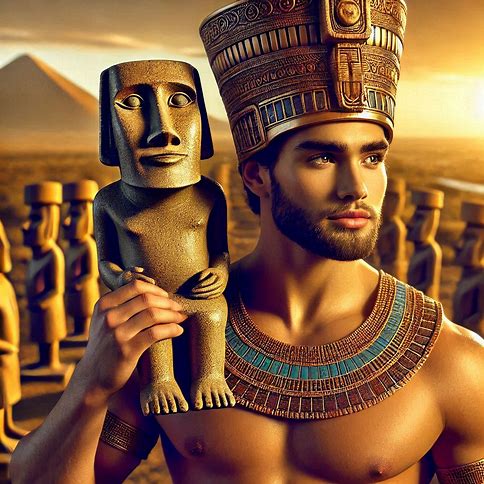
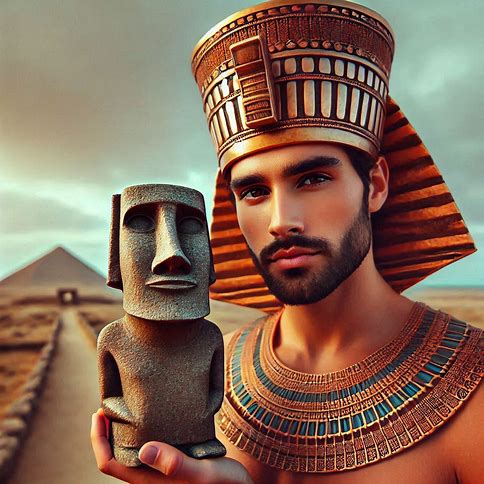
So does androgynous dying and Rising authority was present 3 million years ago,does at that time also he made A such a rule to keep such a closed mouth statue near burial to leave proof of his One soul eternal Authority. This is an unsolved mystery.
The Unsolved Mystery: Who Left the Closed-Mouth Sign?
The objects examined here belong to different places, periods, and cultural settings. Their similarities may have different explanations, and visual resemblance alone cannot establish a shared origin.
Yet the question remains: why do these particular forms continue to attract attention, and what meanings did their makers intend them to convey?
Could the closed-mouth expression be a recurring artistic feature, a symbol connected with particular cultural beliefs, or something more significant within the author’s hypothesis?
Who left the sign—and what, if anything, was it meant to preserve for the future?
The mystery remains open.
Click here to Read More, different Purpose of these Similar Statues Across Different Civilizations
references